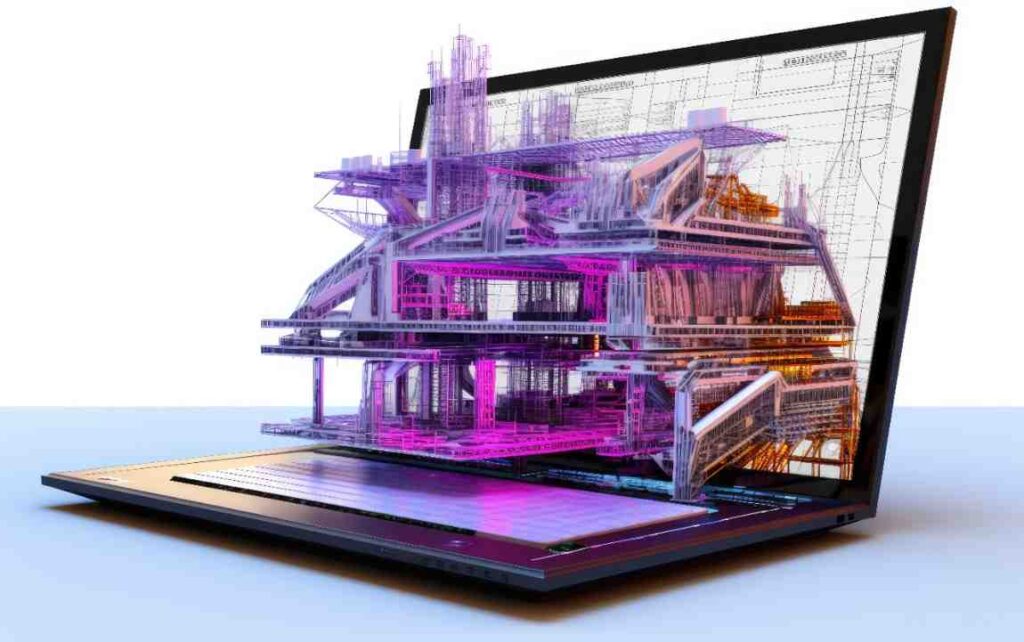
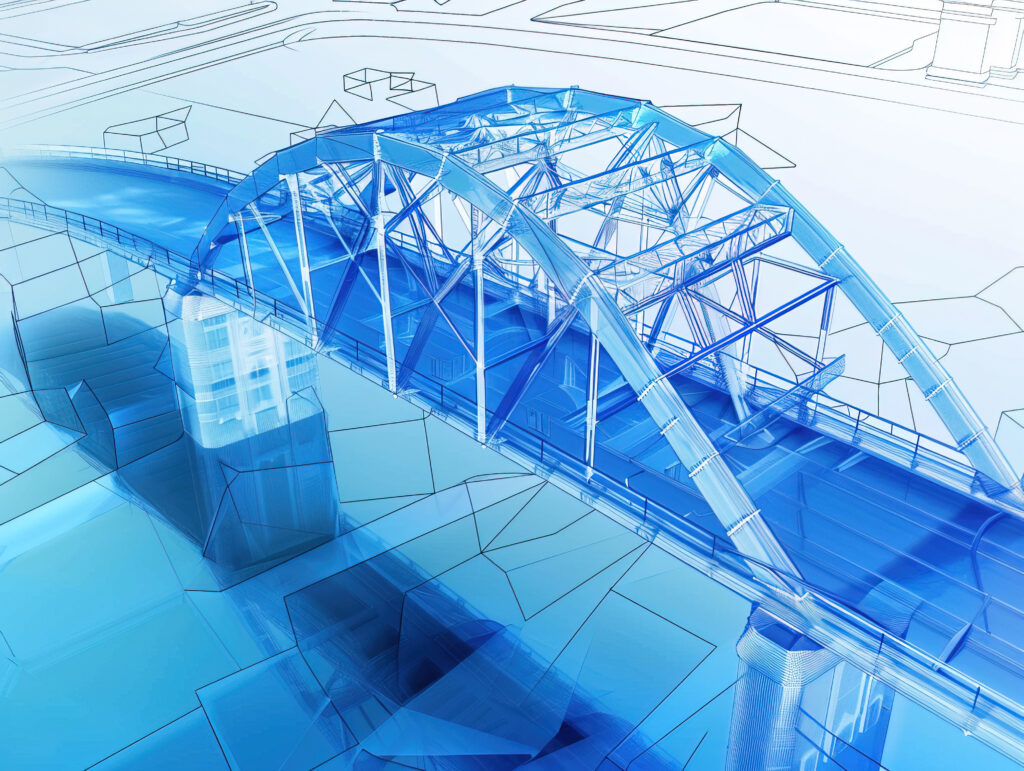
Construction teams have gotten very good at buying BIM software and very inconsistent at getting accurate models out of it. That gap isn’t a technology problem. Two teams using the same version of Revit or Tekla can produce wildly different quality-one delivers a coordinated, construction-ready model, the other delivers a 3D drawing that still generates RFIs and field clashes. The difference is almost never the tool. It’s how the team thinks about the model’s job.
Here’s what that shift actually looks like-and why it matters just as much for structural engineering service companies and structural steel detailing companies as it does for architectural BIM teams.
Stop Treating BIM as a Visualization Tool
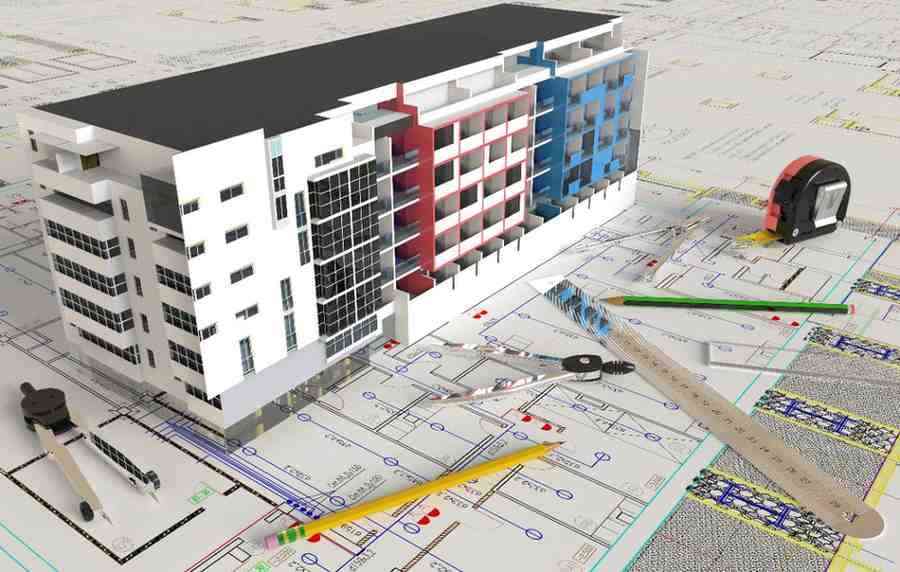
The most common mindset gap is subtle: teams that still think of BIM primarily as “the 3D version of the drawings.” Under that mindset, the model’s job is to look right and match the design intent-accuracy is judged visually.
The more useful mindset treats the model as a dataset that happens to be visual. Every object carries dimensions, material specs, level of development, and metadata that downstream teams-fabricators, estimators, facility managers-actually rely on. A model can look perfect and still be wrong if that underlying data is inconsistent or incomplete. Accuracy has to be judged by whether the data holds up, not just whether the geometry looks clean on screen.
Make Coordination Happen Early, Not at Handoff
Inaccurate models are rarely the result of one discipline’s mistake. They’re usually the result of information arriving too late-structural finalizes a layout before MEP has weighed in, or a connection detail gets modeled before the fabricator flags a shipping constraint.
Teams that consistently produce accurate models build in coordination before problems are locked into the geometry, not after. That means shared models, frequent short check-ins across disciplines, and a habit of raising conflicts the moment they’re spotted rather than saving them for a formal clash report. By the time a clash detection run happens, it should be catching the exceptions-not doing the coordination team’s job for them.
Build Quality Control into the Process, Not the End of It
A lot of teams treat QC as a final gate: model everything, then check it before it goes out. The problem is that by the time an error is caught at that stage, it’s expensive to fix-geometry, connections, and downstream drawings may already be built around it.
The more effective approach checks the model continuously and at multiple levels: geometry verification as it’s built, data and naming-convention consistency as objects are added, and a final coordination pass before delivery. This is the logic behind structured multi-level QA/QC not extra bureaucracy, but catching a problem when it costs ten minutes to fix instead of two days.
Standardize So Accuracy Doesn't Depend on Who's Modeling
Individual modelers can be excellent and a project can still be inconsistent, because “excellent” means something different to each person absent a shared standard. A BIM Execution Plan, consistent naming conventions, and defined modeling standards aren’t paperwork-they’re what makes accuracy repeatable across a team instead of dependent on any one person’s judgment.
This matters most on multi-discipline or multi-detailer projects, where a model gets touched by many hands over its life. Without a shared standard, accuracy erodes a little with every handoff.
Make Coordination Happen Early, Not at Handoff
Inaccurate models are rarely the result of one discipline’s mistake. They’re usually the result of information arriving too late-structural finalizes a layout before MEP has weighed in, or a connection detail gets modeled before the fabricator flags a shipping constraint.
Teams that consistently produce accurate models build in coordination before problems are locked into the geometry, not after. That means shared models, frequent short check-ins across disciplines, and a habit of raising conflicts the moment they’re spotted rather than saving them for a formal clash report. By the time a clash detection run happens, it should be catching the exceptions-not doing the coordination team’s job for them.
Build Quality Control into the Process, Not the End of It
A lot of teams treat QC as a final gate: model everything, then check it before it goes out. The problem is that by the time an error is caught at that stage, it’s expensive to fix-geometry, connections, and downstream drawings may already be built around it.
The more effective approach checks the model continuously and at multiple levels: geometry verification as it’s built, data and naming-convention consistency as objects are added, and a final coordination pass before delivery. This is the logic behind structured multi-level QA/QC not extra bureaucracy, but catching a problem when it costs ten minutes to fix instead of two days.
Standardize So Accuracy Doesn't Depend on Who's Modeling
Individual modelers can be excellent and a project can still be inconsistent, because “excellent” means something different to each person absent a shared standard. A BIM Execution Plan, consistent naming conventions, and defined modeling standards aren’t paperwork-they’re what makes accuracy repeatable across a team instead of dependent on any one person’s judgment.
This matters most on multi-discipline or multi-detailer projects, where a model gets touched by many hands over its life. Without a shared standard, accuracy erodes a little with every handoff.
Treat Errors as Process Signals, Not Just Fixes
When a clash or a data inconsistency turns up, the fast response is to correct it and move on. The response that actually improves accuracy over time is to also ask why it happened — a missed standard, a coordination gap, a step skipped under deadline pressure. Teams that only fix the instance keep making the same category of mistake. Teams that trace it back close the gap in their process, not just in that one model.
Why This Matters for Structural Steel Specifically
Structural BIM carries a particular risk: inaccuracies don’t just affect the model, they follow the project into fabrication. A missed clash or an undersized connection in the model becomes a fabrication error, a field RFI, or a piece that doesn’t fit at erection. That’s why steel structure detailing and BIM modeling can’t really be treated as separate disciplines-a model is only as fabrication-ready as structural detailing standards behind it.
This is also where the mindset shift pays off most directly. A model built with fabrication in mind-bolt access, weld sequencing, shippable piece sizes-prevents problems no clash report would ever catch, because they aren’t geometric clashes. They’re constructability issues that only show up if the modeling team is thinking about the shop floor, not just the design. It’s the same discipline that separates a capable structural steel detailing company from one that only produces geometrically correct but field-unready drawings.

What This Looks Like in Practice
- Models carry structured, verified data-not just accurate-looking geometry
- Coordination happens continuously across disciplines, not at a single handoff point
- QA/QC runs at multiple stages: geometry, data, and final coordination
- Standards and naming conventions are defined once and followed by everyone touching the model
- Errors get traced to a cause, not just corrected and closed
None of it requires new software. It requires a team that treats the model as a shared, data-driven asset rather than a drawing to be signed off and passed along.
How Adept Approaches This
At Adept Engineering, our BIM services are built around this same discipline: coordinated 3D modeling, structured multi-level QA/QC, and standardized workflows that keep models accurate whether one detailer touches them or ten. Combined with our structural steel detailing expertise, that means the models we deliver aren’t just visually accurate-they’re built to hold up in fabrication and the field.
As a structural engineering experts in USA working across the U.S., Canada, the UK, and India, we’ve built our process specifically around what fabricators in each of those markets actually need on the shop floor-not a one-size-fits-all workflow. Our detailing teams, based in Namakkal, India, support structural steel detailing companies and fabricators across the USA, and increasingly, project teams in Dubai and the wider Gulf region, all held to the same QA/QC standard regardless of where the project sits.
Conclusion
Improving BIM model accuracy takes more than adopting advanced software-it requires a mindset rooted in collaboration, data quality, standardized workflows, and continuous improvement.
Organizations that invest in professional Building Information Modeling Services, comprehensive BIM Services, and specialized Structural BIM Services gain the accuracy and coordination needed to reduce risk, improve project efficiency, and deliver successful construction outcomes.
Partnering with an experienced best structural steel detailing company in USA like Adept Engineering ensures your BIM models remain accurate, coordinated, and optimized at every stage of the construction lifecycle-from design and detailing through fabrication and final execution.
Frequently Asked Questions
What are Building Information Modeling Services?
Building Information Modeling Services involve the creation of intelligent digital models that support planning, design, coordination, construction, and facility management throughout a project’s lifecycle.
What is the difference between BIM Services and Structural BIM Services?
BIM Services encompass the complete digital modeling and coordination process across all disciplines, while Structural BIM Services focus specifically on structural elements such as beams, columns, connections, foundations, and steel components.
Why is BIM model accuracy important?
Accurate BIM models reduce clashes, strengthen collaboration, minimize rework, improve construction planning, and help keep projects on schedule and within budget.
How does a structural steel detailing company support BIM projects?
An experienced structural steel detailing company integrates BIM models with fabrication-ready shop drawings, connection detailing, and construction documentation — ensuring smooth coordination between design, fabrication, and installation.